I told a friend this morning, “Just sit down for 10 minutes to write — something is always better than nothing,” so I should probably take my own advice and get to writing, huh?
Auschwitz day. After the previous day spent in the Jewish Ghetto and at Schindler’s factory, I was really not looking forward to going. But how could I be so close to such an important piece of history and not see it for myself? So off we went, leaving the youngest two behind for a fun day with Nana and Poppa. In hindsight, they both could have gone and Caleb would have been fine and most of it would have gone over Camille’s head, but I was glad for the time to focus on it with the older two boys and I know the youngers had more fun with the grandparents. Win.Win.
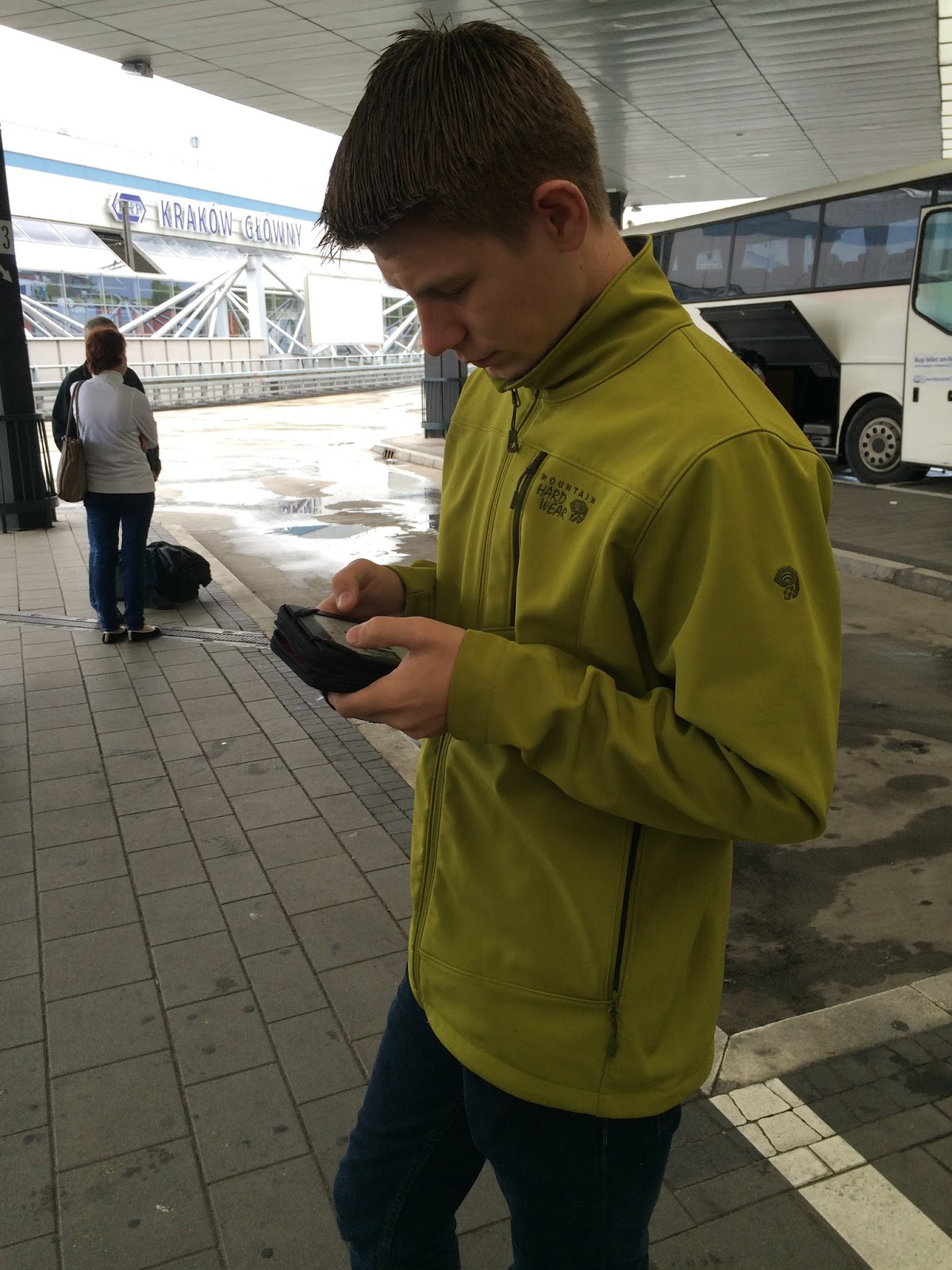
At the bus station. Public transportation in Poland is modern, easy, timed to the minute and the long haul busses all had faster wifi than what we have at home in Bahrain. While we were waiting for our bus, the boys would log in to whichever wifi was available and then as that bus left the station, pick up a new signal from a different vehicle.
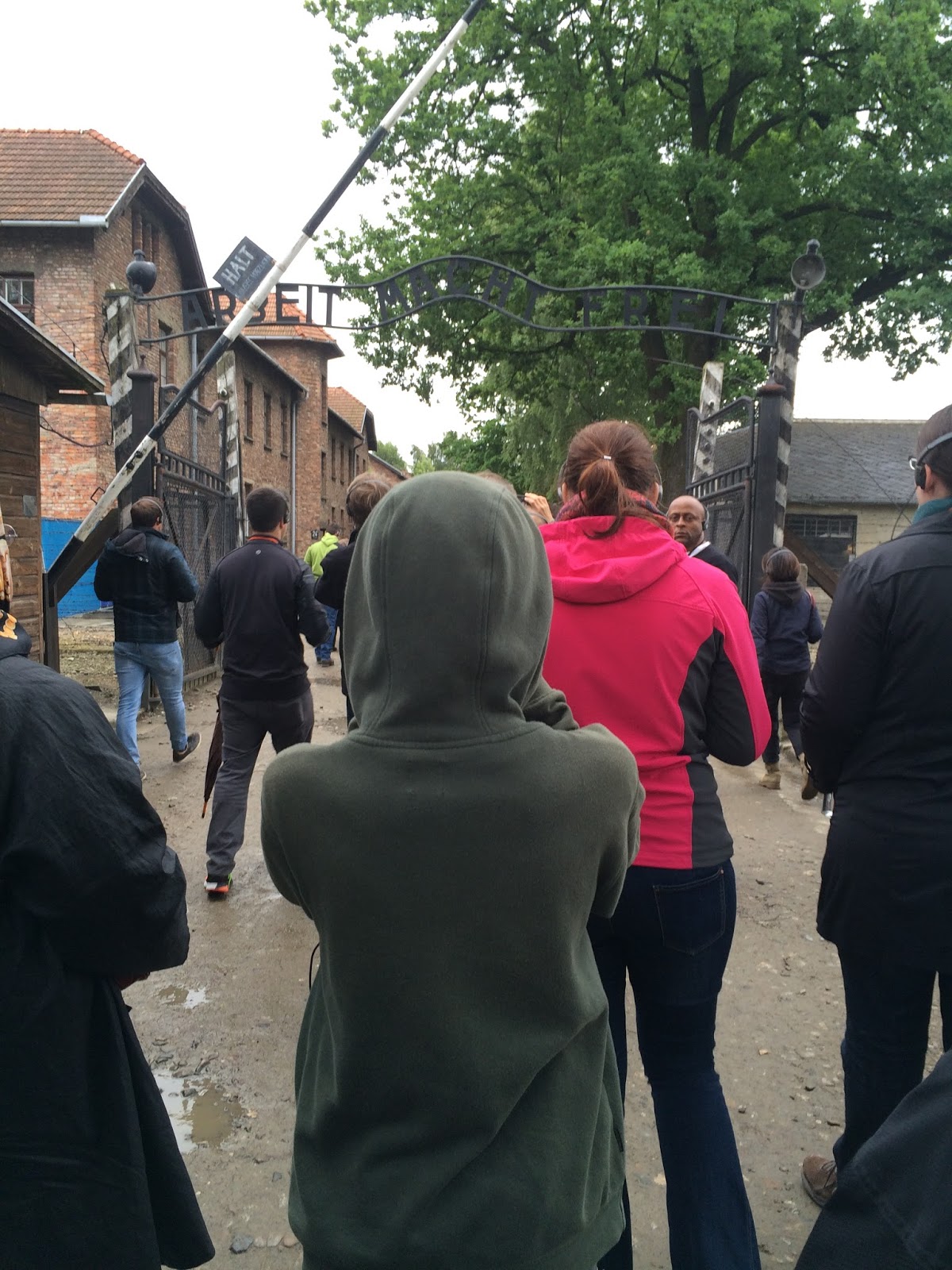
We arrived and joined up with an English language tour group. It was nice that we all had headsets and could hear our guide, Peter, no matter where we were standing. It’s great for someone like me who likes to be on my own program and not be standing right up front.
Walking under the famous, “Work Makes You Free” sign. In one of the books we read, the girl, upon arrival here, mused that maybe her mother was right, and they would be able to work a certain amount before being freed. Nope. It’s an ugly lie.

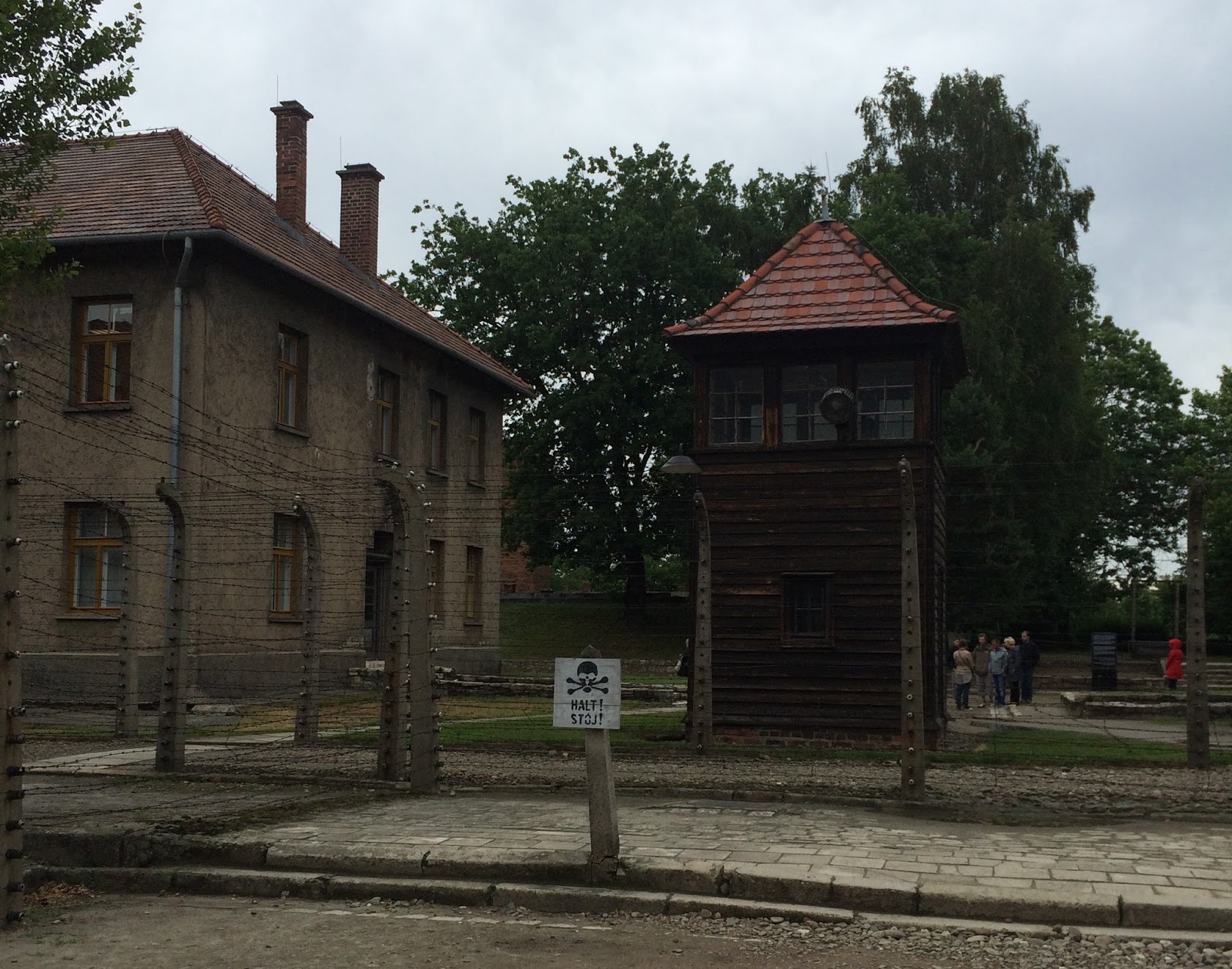
This place was originally a camp for political prisoners and was only later turned into a concentration camp. It reminded us of the military base at Ft. Sill, Oklahoma with its neat brick buildings and scattered trees lining the walkways. The exterior looks much nicer and more civilized than you’d imagine.


Our tour took us inside several of the buildings. Some contained personal items that had been collected from incoming prisoners, pots (a roomful), clothing, eyeglasses and shoes, to name a few categories. I tried to imagine the people who arrived in particular shoes: The woman with the red heels, where did they tell her she was going? I felt an affinity for the woman who arrived in slippers, comfort first, right? Platform wedges — whoever she was, she was determined to look good, wherever she went.

One of the photographs depicting arrival at Auschwitz II/Birkenau camp: Men on one side, women on the other, before they go through selection. The strong ones were picked to work, but the rest were told they were going to get a shower and be able to change, but were gassed instead.
Our guide was very calm, respectful and somber. I appreciated that none of it was sensationalized or dramatized. Not much of the information was new to any of us, but connecting the stories with the actual places was invaluable.


I didn’t take many photos. I wanted to observe and absorb and let the important parts sink in without feeling like a voyeur with a camera. One of the most emotional parts for me was one of the hallways where they had small mugshot style photos of prisoners with shaved heads that were taken as part of inprocessing. The photos covered the walls on both sides of the long hallways with the prisoner’s name, age, occupation and date of death beneath their picture. Every single one had the same wide-eyed and scared look in their eyes. These young, strong men who didn’t know what was going to happen next. Almost all of this particular group were brought to Auschwitz in 1941 and most of them didn’t last a year.
They stopped taking photos of prisoners because the purpose was to use them for identification but they found that after several months, all of the prisoners became unrecognizable, so the photos were useless.
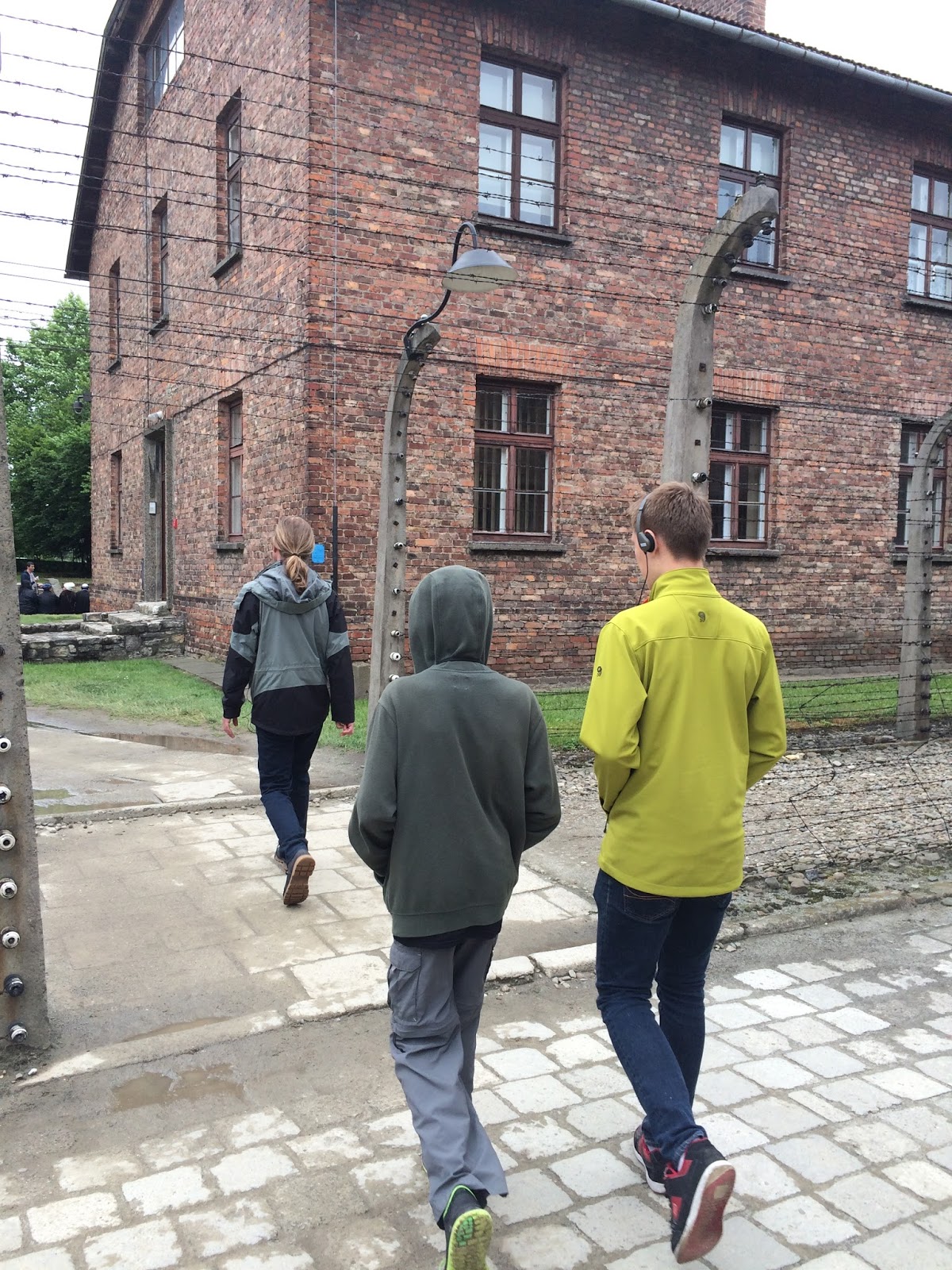
Leaving the inside of Auschwitz I

After this portion of the tour, we got on a bus and headed about 5 minutes down the road to Auschwitz II/Birkenau. This is the huge extermination camp that makes Auschwitz “famous.” (and what you see if you watch Schindler’s List.)

The train would pull right in through the archway and prisoners would be unloaded right next to the tracks.
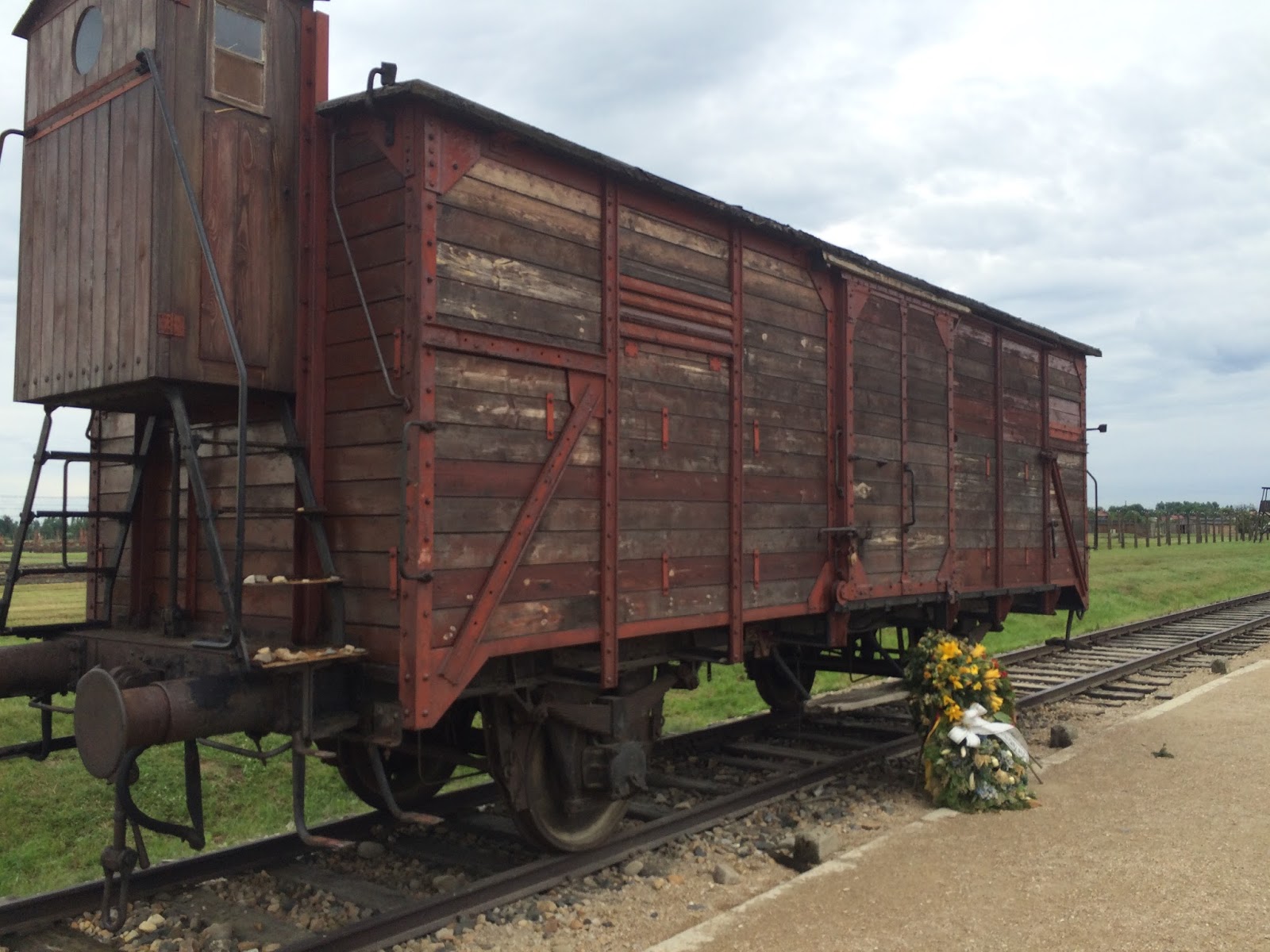
These are the kinds of rail cars they would arrive in. Typically they would hold 70 people, but the book we read described a time when they were desperate to fit more on and the solders were demanding 100 per car and then up to 130 per car. They couldn’t move to even wipe sweat out of their eyes because they were so tightly packed.

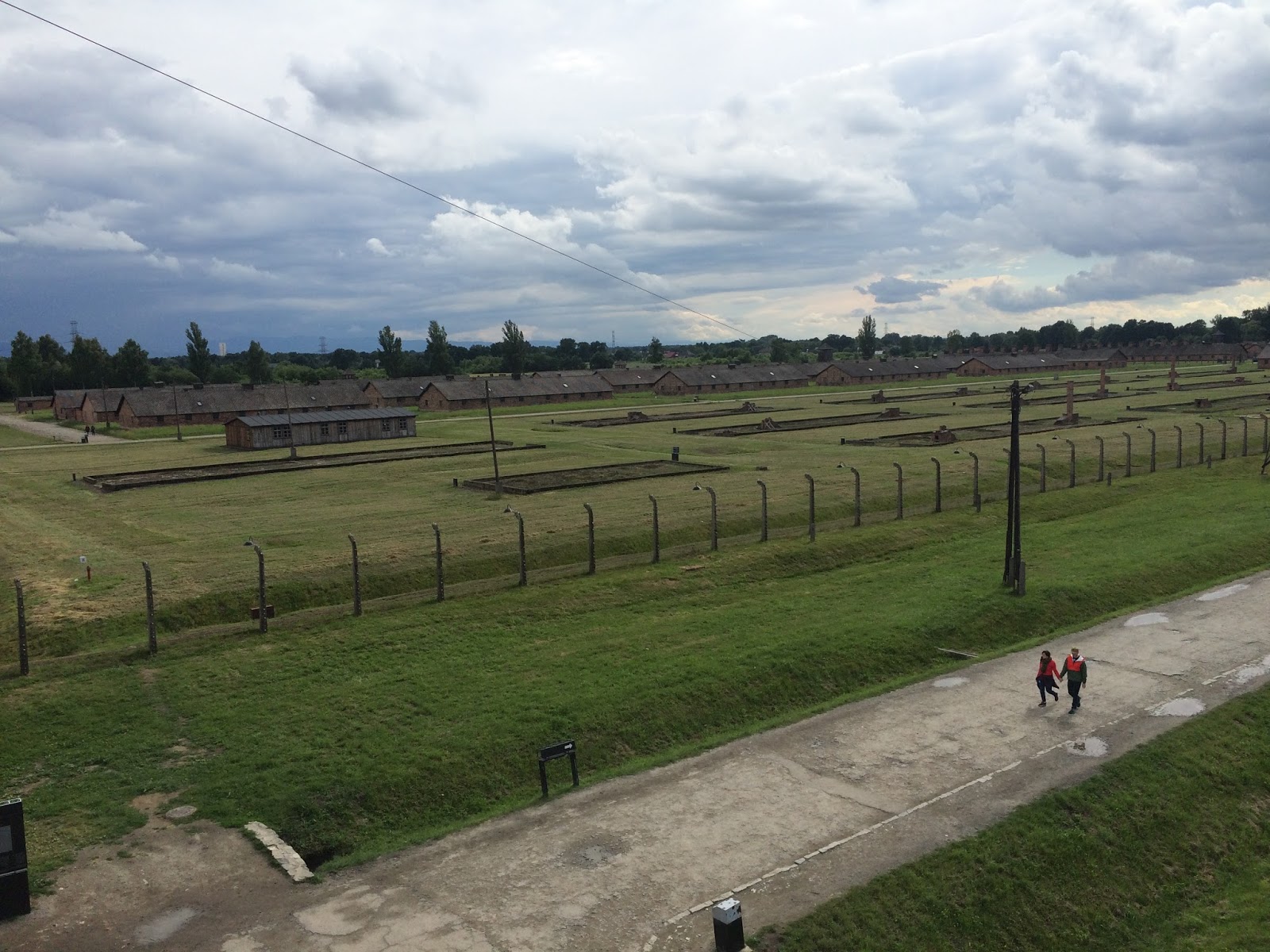
This place was huge. Expansive. And there were plans in the works to expand it even further beyond that line of trees.

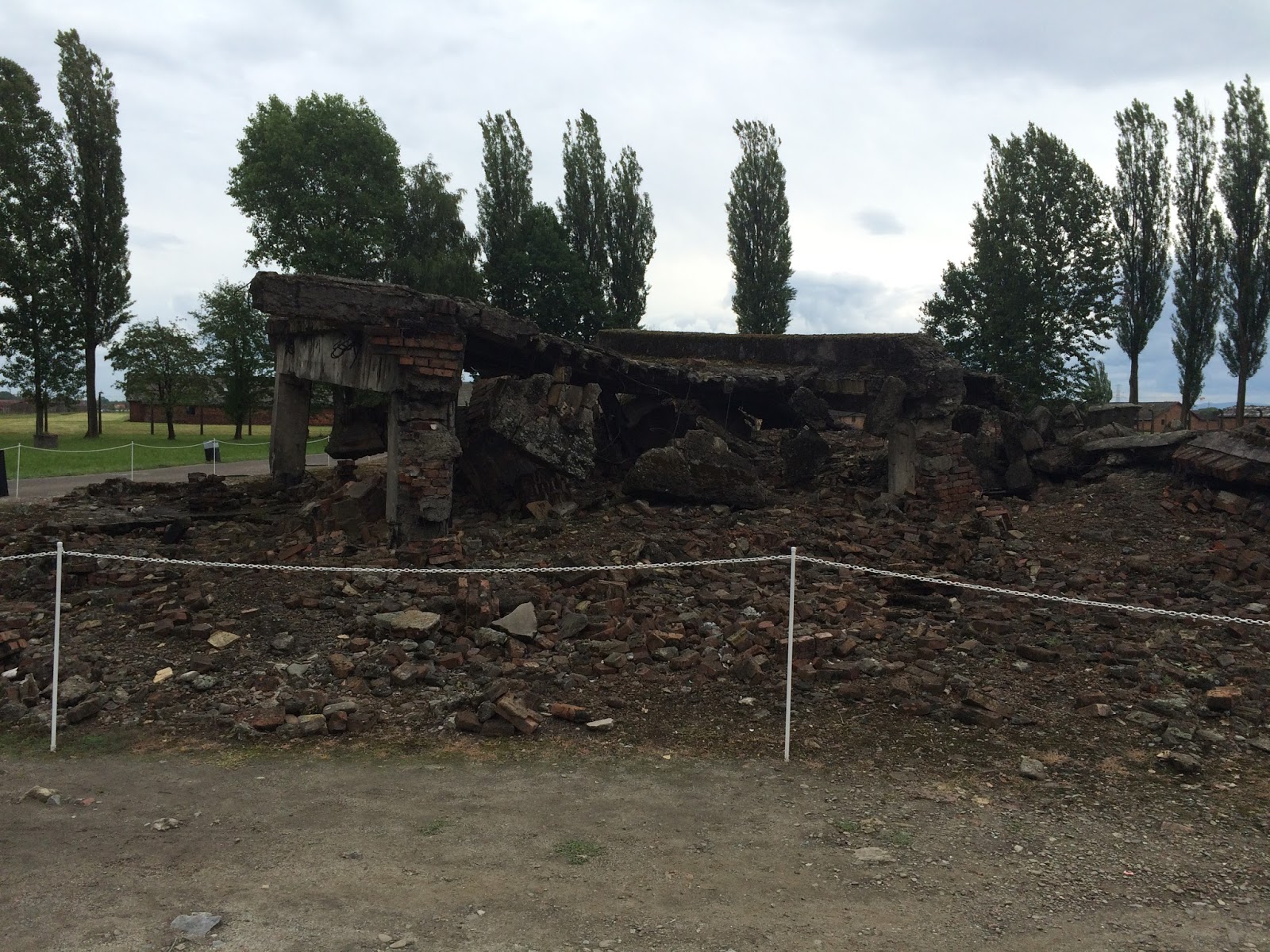
As the allied troops moved in, the Germans attempted to destroy the crematoriums. This is what remains.

Each chimney is from one of the buildings that used to house prisoners. When the displaced German farmers returned to the area, they needed the wooden planks to rebuild their homes. A few of the buildings have been restored, but the brick chimneys mark the rest.
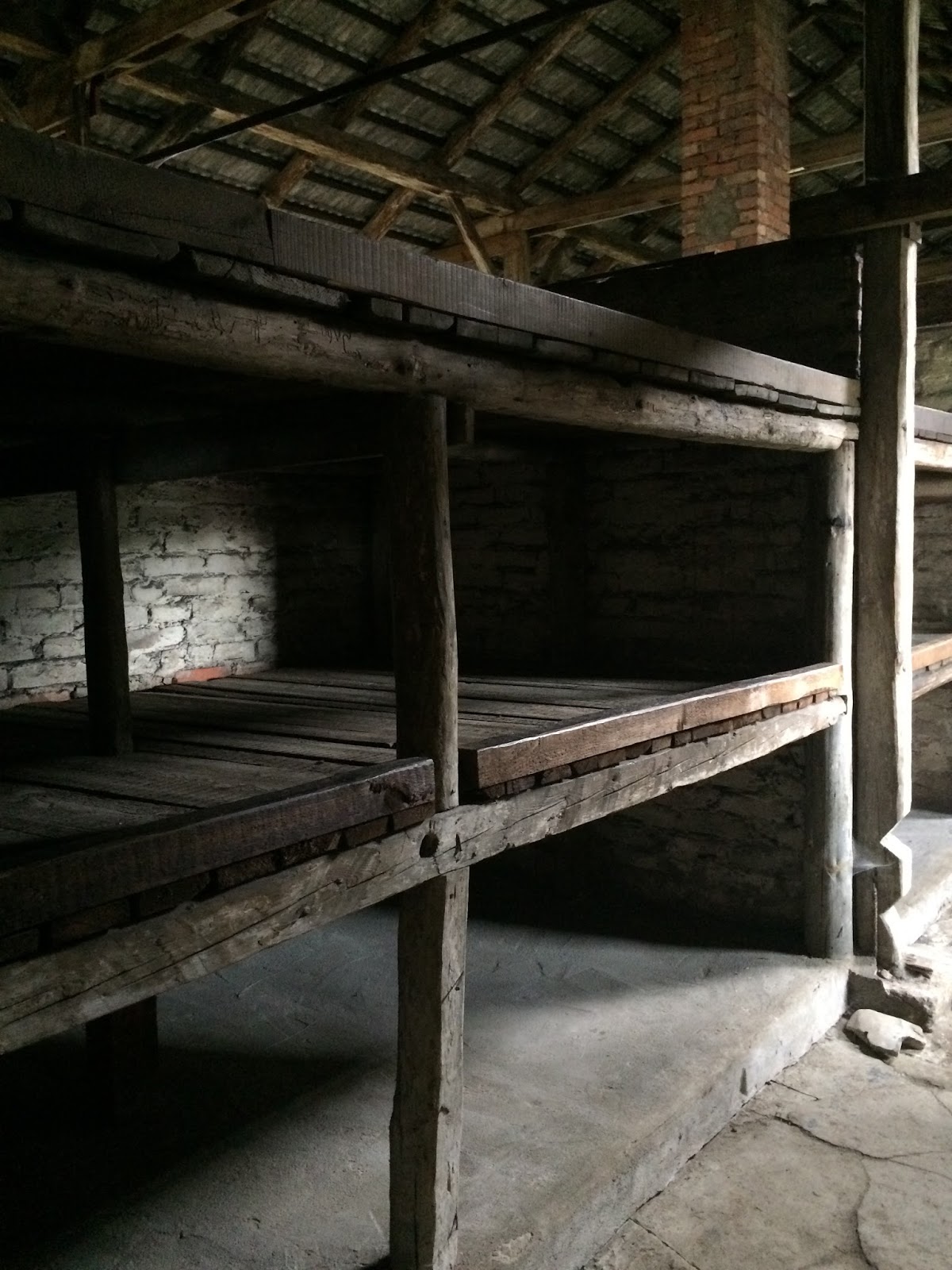
Inside the buildings where prisoners were housed. Hundreds of people were expected to sleep in each building. Our guide said that the floor was the worst for rats and if it was wet, but sometimes it saved lives when the temperatures dropped and those on the top levels froze.
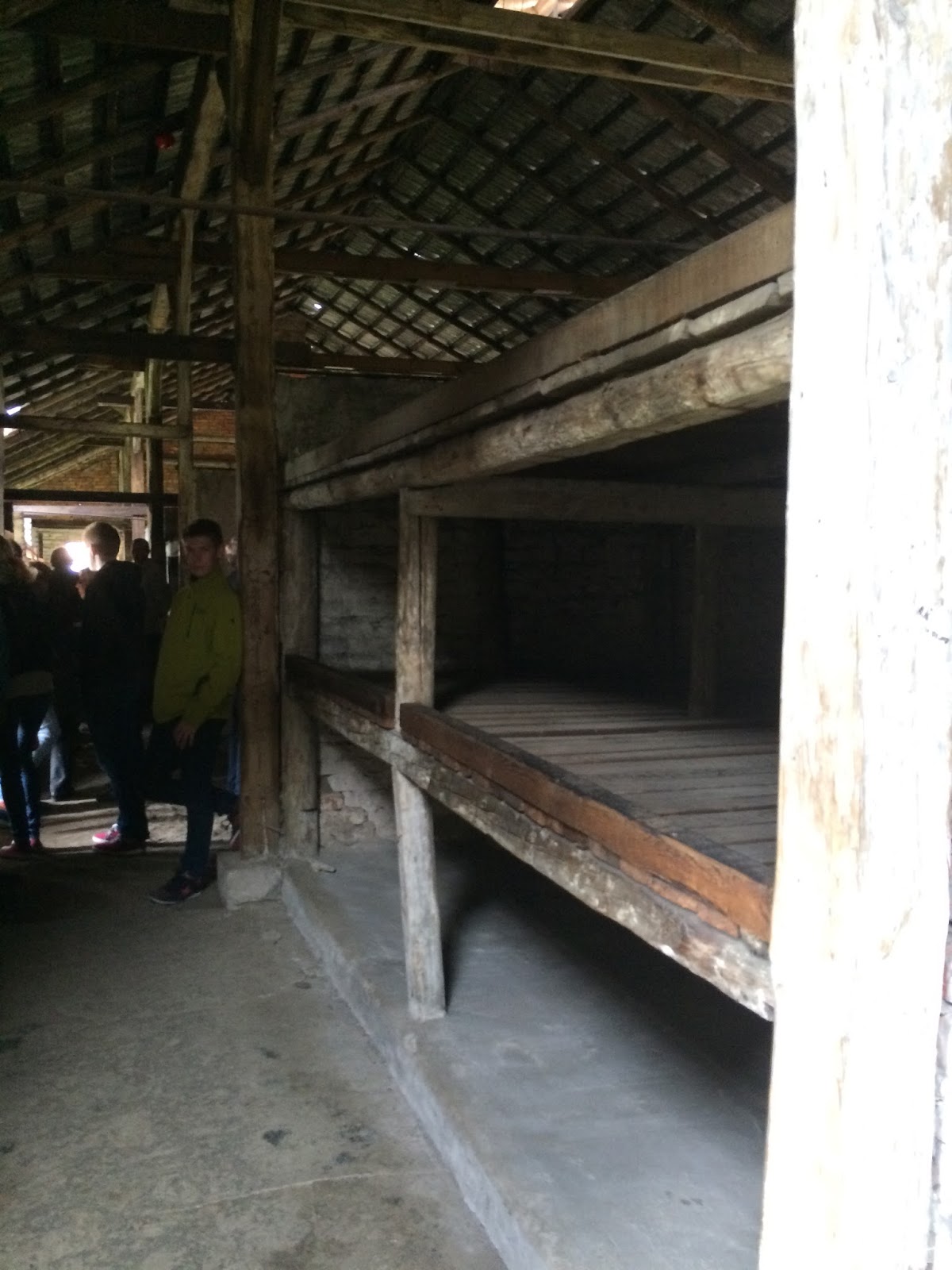
Thoroughly unbelievable that people had to live like this and that anyone survived.

On a cool June day we were all wearing jackets. Imagining that those who were brought here had nothing but thin cotton clothes and had to endure exposure to all 4 seasons.
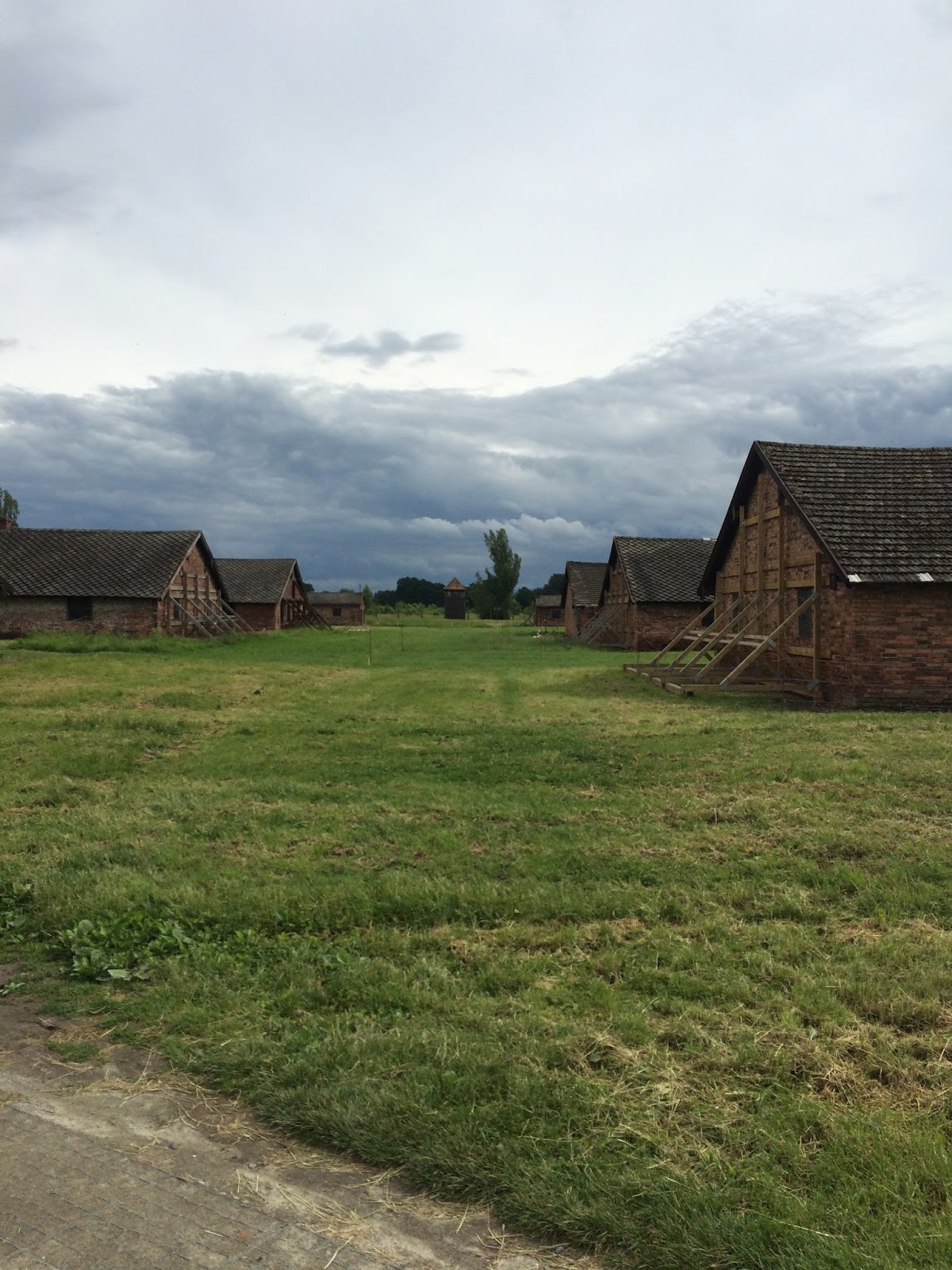
Auschwitz II/Birkenau was peaceful, meditative and quiet. Our guide told us a few things, but mostly we walked and observed.
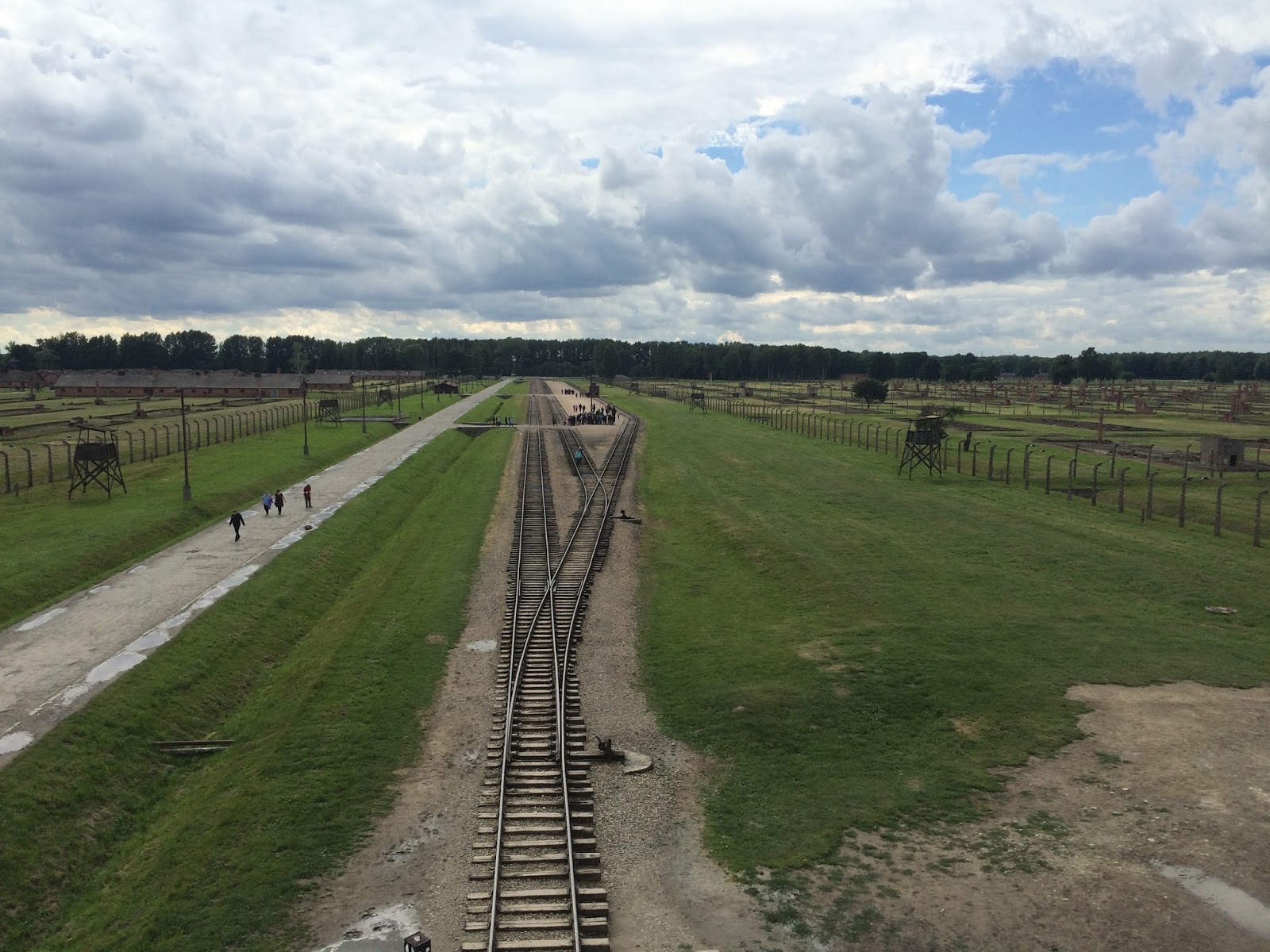
Views from the guard tower. Men were on one side of the tracks, women on the other. Crematoriums are hidden in the tree line. How did the guards live with themselves? What lies did they believe about why these people were here?


As we were leaving, we met this woman, a survivor of Auschwitz. She is a feisty, funny, and sharp 81 year old woman who has written a book about her time in the concentration camp. She and her twin sister survived because they were one of the sets of twins that Dr. Mengele experimented on. Her parents and two older sisters were sent to the gas chambers.

We bought her book and she signed it for us. Carter read the entire 90 minute bus ride home. A perfect end to a once in a lifetime experience.